Source:https://mp.weixin.qq.com/s/lybTPdDvj8g2cYMexeWLDg
Zimbabwe — Tariff Schedule
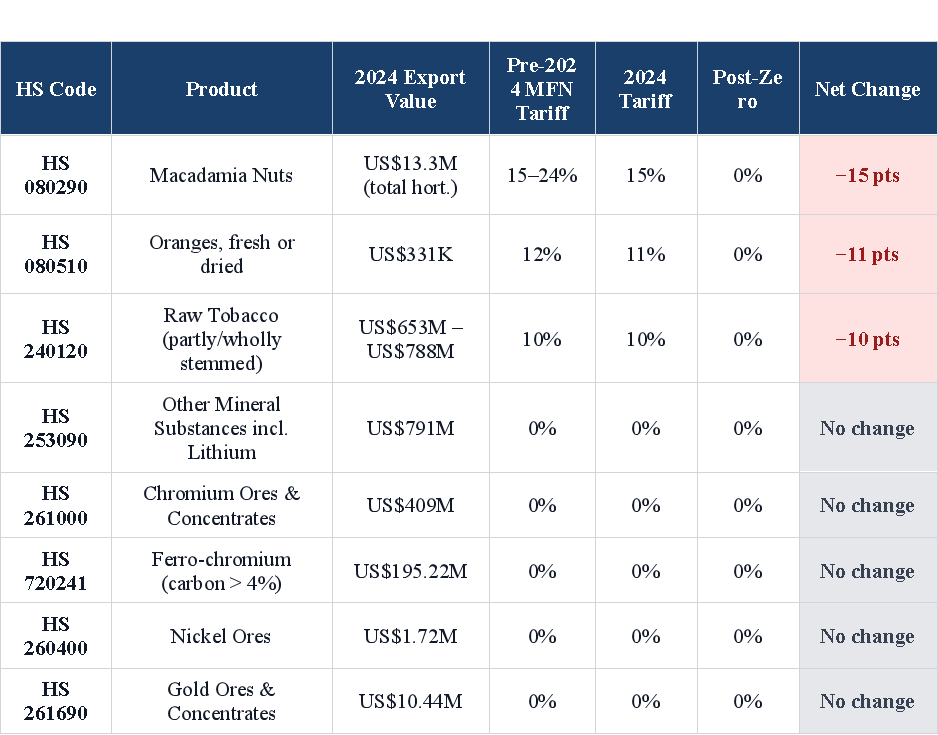
Total Exports to China (2024): US$2.39 – US$2.44 billion
Impact: VERY HIGH
Zimbabwe is the single largest direct beneficiary of the zero-tariff regime among SADC nations. The catalyst is raw tobacco, which historically attracted a 10% applied MFN duty and accounts for an estimated 33–40% of Zimbabwe's total exports to China. As the world’s fifth-largest tobacco production base, Zimbabwe exports to China at values of US$653M–$788M annually. The removal of this duty creates an immediate, material price advantage in a market where Zimbabwe already dominates agricultural purchases. Beyond tobacco, horticulture—citrus and macadamia—faces additional tariff removal of up to 11–30%, unlocking further growth following the 48% year-on-year increase already recorded in 2024.
Mozambique — Tariff Schedule (LDN from 1 December 2024)
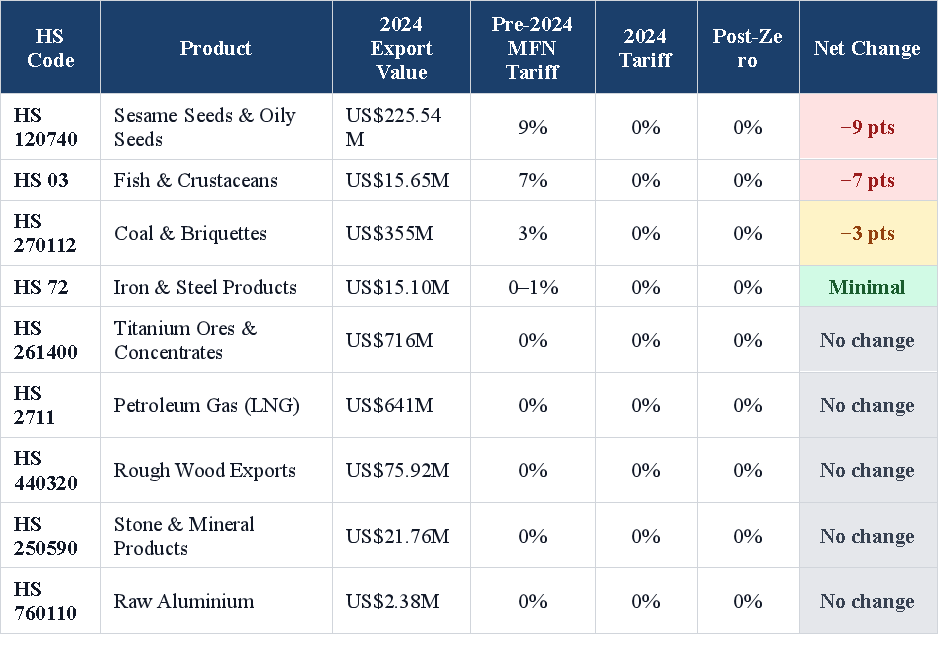
Total Exports to China (2024): US$1.62 – US$2.32 billion
Impact: HIGH
Mozambique qualifies as a Least Developed Nation and secured zero-tariff access from 1 December 2024 under China's LDN framework. The bulk of its mineral and fuel exports were already tariff-free, so the high-impact category is oilseeds — particularly sesame seeds (HS 12) at US$225M — which previously attracted a 9–10% applied MFN rate. Agro-processing and tobacco also offer significant upside.
Lesotho — Tariff Schedule (LDN from 1 December 2024)
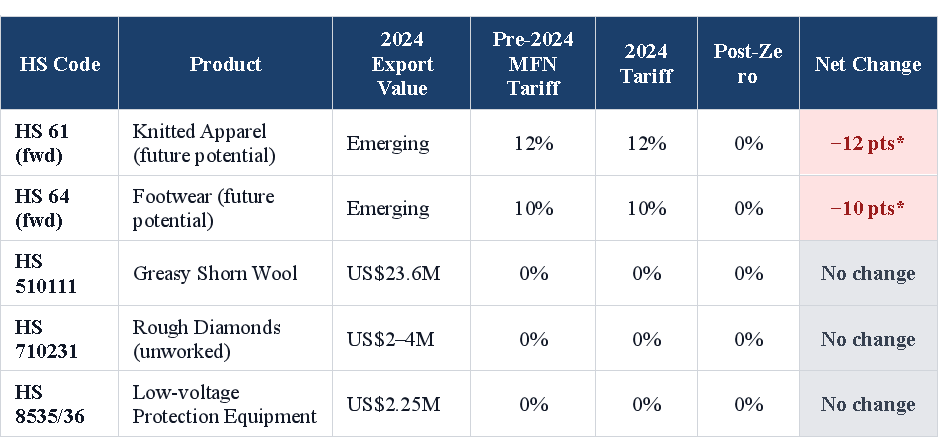
Total Exports to China (2024): US$29.3 million
Impact: HIGH (transformational potential)
Lesotho's current exports to China are small and fully tariff-free (wool, diamonds, electrical equipment). However, its designation as a Least Developed Nation from December 2024 is strategically significant: Lesotho has an established textile and apparel manufacturing base serving major retailers, and apparel exports to China previously attracted duties of approximately 12%. Zero-tariff access, combined with low labour costs, creates conditions for Chinese textile or footwear brands to use Lesotho as a duty-free re-export hub into the Chinese market.
South Africa — Tariff Schedule
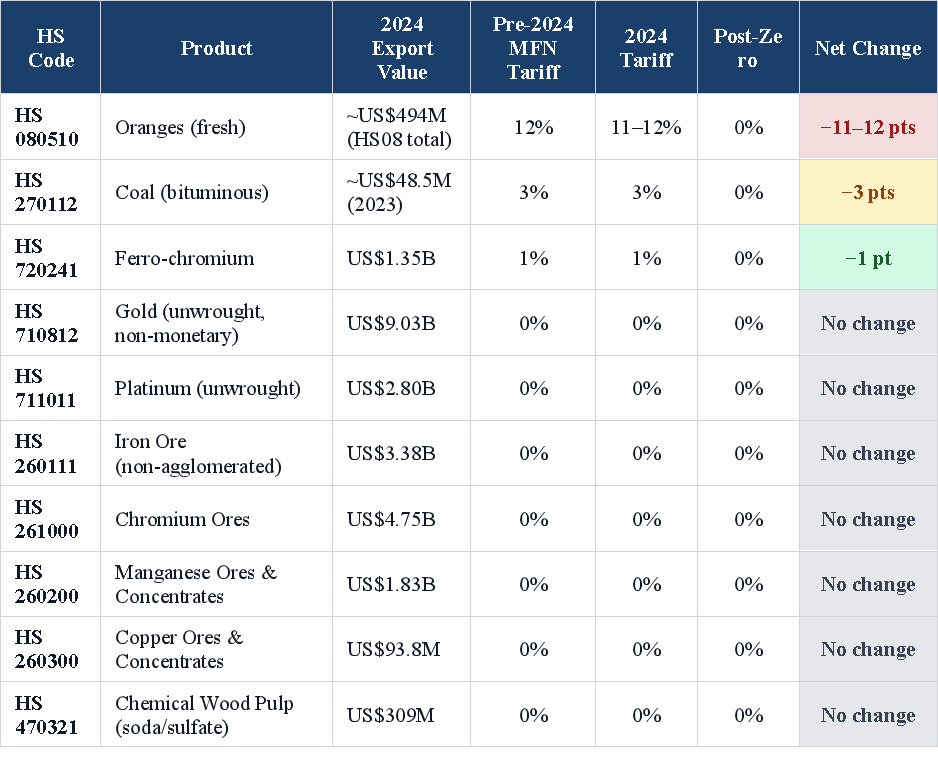
Total Exports to China (2024): US$25.7 billion
Impact: MODERATE
South Africa is the region's dominant trading partner, yet derives only moderate benefit from the zero-tariff policy. The primary reason is that its export basket is overwhelmingly composed of raw minerals and precious metals — all of which entered China at zero MFN duty well before 2024. The meaningful tariff changes fall on fruit (oranges at 11–12%), coal (3%), and ferro-chromium (1%). In the fruit sector, South Africa exports approximately US$494M of edible fruits and nuts to China (HS 08), with fresh oranges (HS 080510) bearing an 11–12% duty; notably, South Africa is the world's second-largest citrus exporter, and Chinese fresh fruit demand has grown at double-digit rates. On the ferro-chromium front, South Africa's ferro-chromium exports (HS 720241, US$1.35B) faced a modest 1% duty that is now removed.
Author | Leigh-Anne Richards
Editor | Lou Siqi; Zhao Han; Wang Yijie

Wechat丨CADFUND